Sportsman Specter
Fishing & Hunting Ghostwriter
What We Do:
- Fishing, Hunting, and Boating Product Descriptions and Reviews
- Social Media Posts for Guides and Outfitters
- Email Newsletters for fish and game organizations
- Website and Blog Content Creation
- Local Business Spotlights for Outdoor Companies
- Expert Consulting Services---Increase Technical Accuracy in Television/Movie Scenes
Writing Samples
Product Description/Review:
Avian-X AXF Outfitter Pack--Lesser Canada Goose Decoys---
I purchased these decoys from Macks Prairie Wings in February of 2024 and was not disappointed. While I am a strong proponent of silhouette spreads, I always keep some high-quality, fully-flocked, full body geese among the ranks. This dozen decoy outfitter pack features head-to-tail, lifelike flocking, eight different poses, twelve, (twenty-four inch) motion stakes, and a twenty percent larger size than standard Lessers. This was a key selling point for me. Where I live, hunting leases are scarce, expensive, and usually prohibit driving vehicles out into the field. I frequently hunt solo and need to hand carry or sled decoys out to the pit. This “disco dozen” is the perfect size to mimic either Lesser or Greater Canada Geese, without the bulkiness and weight of standard full bodies. The gang is all there with 2 walkers, 2 stretch-neck feeders, 2 regular feeders, 2 picking feeders, a stub neck, a sentry, an open-mouthed caller, and a searcher. A 12-slotted bag with a shoulder strap is also included. The squad barely weighs 35 pounds and eats up only a fraction of the space that most full-sized honkers would. With easy transport and quick deployment, these decoys have become my favorite go-to for getting an extra dozen fully-flocked, motion decoys into my spread for late-season birds on sunny days. I believe that aside from stuffers, these are the pinnacle of realism.
Cons: Pricing and Bag Quality. The attention to detail and quality flocking on these convincing imposters does not come cheaply. I purchased my AXF Outfitter Pack on sale for: $529.99 plus $31.80 tax, for a total of: $561.79 with free shipping. That works out to roughly $46.82 per decoy. The current MSRP at the time of this review is: $569.99. While price is no guarantee of excellence, we often get what we pay for in the hunting world. Regardless, most hunting budgets won’t allow for a large spread comprised solely of AXFs. The included carrying bag is lightweight and easy to haul. That said, the induvial slots could be slightly larger to reduce rubbing and the wear and tear to flocking it causes. These decoys are an investment and should be cared for as such. The bag construction is also not particularly rugged, so the entire pack requires somewhat delicate handling to ensure longevity.
4.5 out of 5 Stars.
Social Media Post:
Last Hurrah Charter Fishing---Published Facebook and Instagram Sept. 11, 2023
Phenomenal Fishing in Fall is Fun for All! >-)))*>
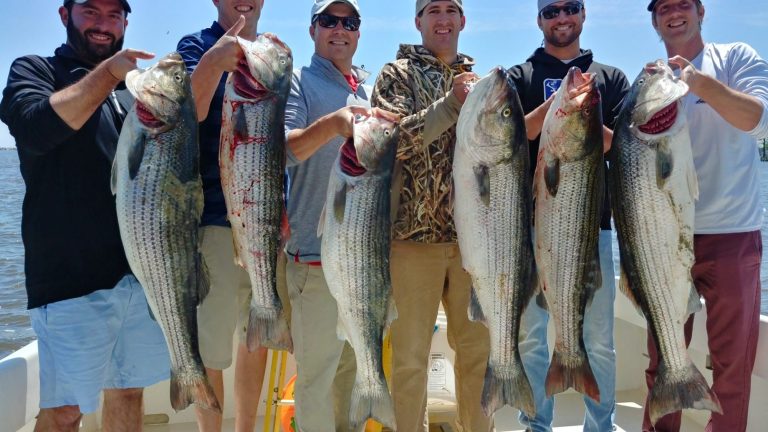
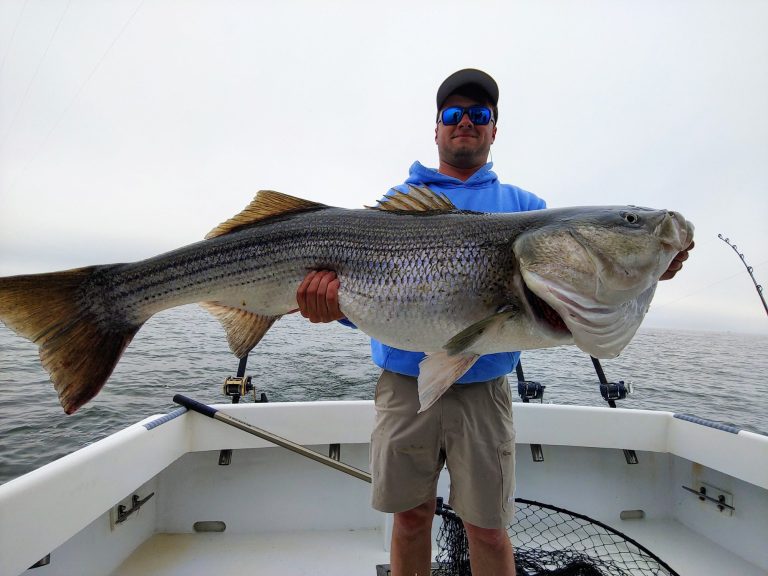
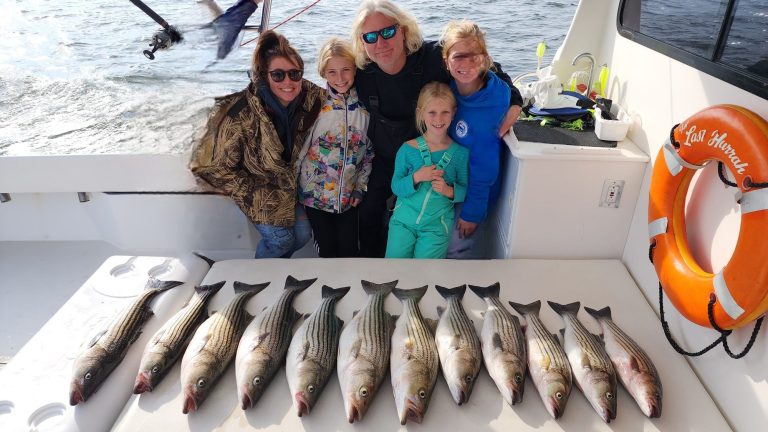
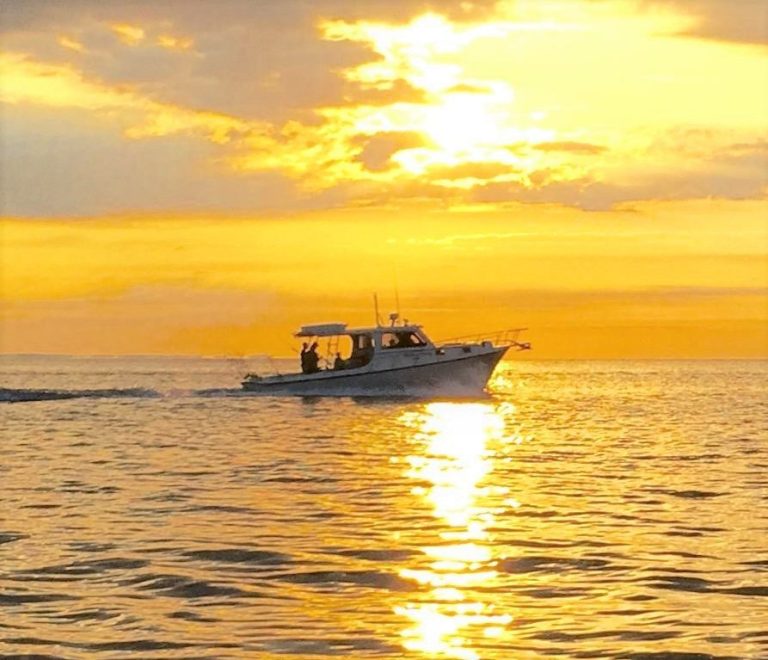
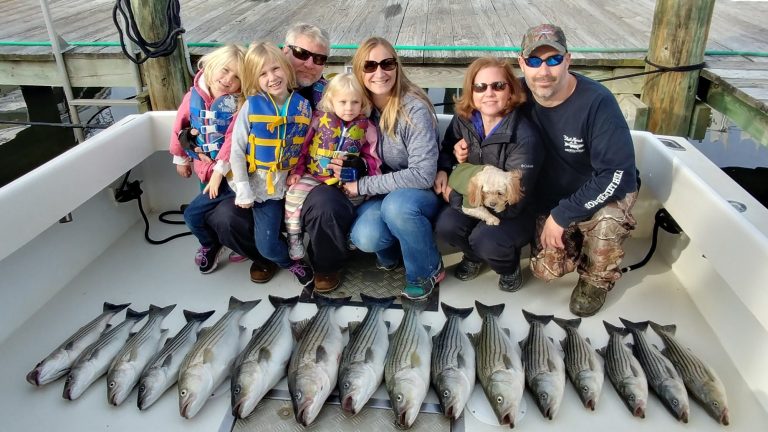
It is already mid-September, and time to book your fall fishing trip on the Chesapeake Bay. The Last Hurrah is booking up the rest of the Maryland season, which runs until December 10th. All indicators promise this fall to be one for the record books (and photo albums). The ‘Hurrah can take groups up to six for private charter. We run seven days a week, and provide all licenses, tackle, gear and ice. All you need to do is book, hook, and cook your catch. There are no age restrictions, and dogs are welcome on board. In fact, all dogs receive a complimentary toy, unlimited pets from the Captain, and all the treats that their parents will allow. So, make this autumn a memorable one by having a striped bass blast with us! We guarantee it is more fun than raking leaves, or Captain Scott will give you his own, personal leaf collection!
Here are the dates that we currently have available:
September: 13, 21, 28
October: 4, 12, 30
November: 3, 11, 17, 19
December: 2, 6, 9
#AnnapolisFishing, #ChesapakeakeRockfish, #ChesapeakeBayRockfishCharters, #ChesapeakeBaySportfishing, #DogFriendlyFishing, #FallFishingChesapeake, #MDTourism, #TravelCoast#fishing#chesapeakebayfishing#stripedbassfishing#charterfishing#rockfish#rockfishing#dealemd#dealemaryland#annapolis#annapolismd#maryland#virginiaisforlovers#chesapeakebay#chesapeakebayrockfish#annapolisfishingcharters#marylandfishing#marylandfishingcharter#chesapeakebayfishingcharters
Email Newsletter (sans Images):
Call the burn ward because fishing is on FIRE!! 🔥🔥🔥 Some days, the fish are so fired up that catching them feels like self-defense. The legal limit is now two fish per charter boat customer between 19 and 31 inches. Every trip lately has yielded limits, releases, and sore muscles for our anglers. It's not uncommon to hook fifteen fish simultaneously! So, come catch the chaos with us. The memories will last forever, but this bite won't.
We run charters on any day that ends with a "y". Group size can range from two to six people for private charter. Dogs are welcome.
Mornings: 5:30-11:30
Afternoons: 12:00-6:00
Shoot Captain Scott an email and get your Chesapeake Bay fishing charter booked!
* Entertain Clients
* Celebrate Birthdays, Anniversaries or Other Special Days
* Employee Appreciation
* Retirement Send-Off
* Family Quality Time
* Bachelor/Bachelorette Parties
* Reunions
* Gift Certificates
* Catch Up with Friends & Neighbors
* Treat Your Dog
LET’S GO CATCHING!!!
We are located at Atlantic Marina on the Magothy, just 30 minutes from both Baltimore and Annapolis.
captain@lasthurrahcharters.com
443-223-5919
Website/Blog Content:
Fall Turnover on the Chesapeake
Fall fishing can be some of the finest of the year, but success requires an understanding of the Chesapeake Bay’s natural transition or “fall turnover.” This knowledge can aid savvy fishermen to confidently harvest their fill of fillets while others are guessing instead of catching.
Temperature, salinity and circulation determine the basic aspects of any estuary. Wind, rainfall, air temperature, snow melt, currents, tides, waves and even the Coriolis Effect shape and mold these fundamentals. The term “fall turnover” refers to the annual phenomenon that the Chesapeake’s specific water layers undergo and their effect on its eighteen trillion-gallon ecosystem.
During the spring and summer months, the Bay’s surface is heated by the sunshine and maintains a higher temperature than deeper areas. The cooler, saltier water is denser and therefore sinks to the bottom during this time of year. Two distinct layers of water stratify with a thinner zone in between them. The uppermost and warmest layer is the “epilimnion”. It is oxygen-rich because photosynthesis from the sun and mixing from the wind create and distribute oxygen throughout the layer. The deepest and coldest layer, the “hypolimnion”, is typically deprived of oxygen. The skinny section between them is referred to as the “pycnocline”. It is a stable layer where water density increases abruptly with increasing depths due to changes in salinity and water temperature. This layer is a product of two other layers---the “thermocline” and the “halocline”. Yes, layers are stacking up like a Smith Island cake, but it’s not as complicated as it seems. Most anglers are already familiar with the thermocline and know it is a transitional zone situated between the warmer surface water and cooler depths. The temperature gradient here is very high, meaning that the water temperature changes significantly over a short vertical distance (depth). Similarly, the halocline has a steep salinity gradient. Basically, a salt layer or “cline” and a temperature cline cause the density cline. (Thermo + Halo = Pycno.) The stratification of the Bay’s layers and a significant pycnocline can create a barricade to nutrients mixing between layers and can void the bottom of dissolved oxygen. This is why fish are often not especially deep in many areas during the summer.
Epilimnion – The top-most, warmest layer with mixed, well oxygenated water.
Pycnocline – Made up of the thermocline and the halocline. Where density gradient is greatest. Serves as a stable barrier between the warmer/less dense surface layer and the colder/denser deeper layer.
Hypolimnion – The bottom-most layer. The coldest layer during the summer. Water here is often stagnant and oxygen-poor.
When autumn brings chilly temperatures and an abundance of wind, the Bay is stirred like a massive mixing bowl. The fresher surface water cools the quickest and density becomes consistent throughout the water column. This causes the top layer to sink and vertical melding to occur. As the water blends, it pushes nutrients up from the bottom and distributes oxygen deeper. During much of the winter, water salinity and temperature are relatively constant from the surface to the bottom. The turnover can happen overnight but will do so in different areas at different times depending on conditions.
So, who cares? Fish do! Striped bass, the crown jewel of the Chesapeake, are greatly affected by this seasonal shift. With dissolved oxygen more evenly dispersed, fish may be suspended anywhere from the very bottom of the Bay up to the surface of a post-turnover location. It can be more challenging to target fish scattered through the depths, and extremely deep fish can be reluctant to bite at times. However, post-turnover areas can provide large bait concentrations and schools of active, cooperative, fish. It is these areas that fishermen should canvass thoroughly. Trolling spreads should cover the majority of the water column until sonar readings illustrate a definitive pattern. If the fish-marks become consistent within a certain depth-range, it’s time to fine-tune your spread and reset some gear to the appropriate depth. To consistently catch late-season stripers, it is imperative to monitor their habitat closely and utilize fall turnover patterns for a strategic advantage.
Local Business Spotlight:
In the Pocket Guide Service
1327 Downing Lane
Galena, MD 21635
443-218-7325
Who---Luke Johnston is a three-time World Goose Calling Champion and the owner of In the Pocket Guide Service. He has been guiding waterfowl hunts on the eastern shore of Maryland for over thirty years. Clients refer to him as “the goose whisperer” but he is also fluent in a variety of duck dialects and has placed in the top five of the Mason-Dixon Duck Calling Contest numerous times. His field experience and calling prowess allow him to read birds like a book and virtually command them into the pocket of his decoy spreads.
What---In the Pocket Guide Service is one of the nation’s leading waterfowl hunting outfitters. They offer open-water, impoundment, and dry field hunts for puddle ducks, divers, and Canada geese throughout the Maryland seasons. With access to over twenty hunting farms and with four other professional guides on staff, In the Pocket has the properties and the pros to put their clients on birds. They scout every day and keep a constant hand on the pulse of the migration.
When---Luke Johnston started In the Pocket in 1993 and has been providing successful and memorable hunts for his clients ever since.
Phone calls and emails are usually returned quickly between 6:00 a.m. to 7:00 p.m. Guided hunts are available every day during the Maryland duck and goose seasons. Morning and afternoon hunts are offered based on bird behavior and feeding patterns. Hunts tend to book up in advance, so don’t procrastinate.
Where---In the Pocket Guide Service is headquartered at 1327 Downing Lane in Galena, Maryland but has prime hunting properties scattered throughout Kent County (known as “The Goose Hunting Capital of the World”) as well as some in Queen Anne’s County.
Why---Johnston and his pro staff are passionate about waterfowl hunting and eager to share their love of the sport with both beginners and experienced gunners. They believe what makes them unique is their dedication to small details and customer service. Johnston proudly explains, “Our clients get a full experience when they hunt with us. Naturally, we work tirelessly to harvest birds, but it’s also about education, hospitality, and providing a taste of our region’s rich, hunting heritage.
How---In the Pocket credits experience, property management, scouting, top quality decoys and work ethic for their consistent hunting and business success.
www.inthepocketwaterfowl.com
443-218-0000
Technical Consulting Services:
Dear XXXXX Production Company,
In reference to the assembly cut of your recent movie, “The XXXXX”, I composed notes pertaining to the fishing scene, located 00:27:12 into the film.
The two lead characters are fishing in a small, freshwater pond in the northeast of the U.S. This scene displays three technical inaccuracies which make it unrealistic and therefore less believable:
- Equipment
- Grip/Handholds on said equipment
- Technique employed
The actors are utilizing conventional rods and reels designed for trolling. (Trolling refers to presenting lures or dead baits by pulling them through the water via a boat or other moving vessel.) In addition, their gear is designed for use in brackish or salt “big water” while targeting large, pelagic species. It is not appropriate for the location.
While children might fish such a pond with spincast gear and experienced anglers could potentially operate baitcasters in this setting, it is most likely that spinning tackle would be the obvious choice.
Recommended Rod:
Type: Spinning
Material: Graphite
Length: 6 to 7 foot
Power: Ultra-Light to Light
Action: Slow to Moderate
Recommended Reel:
Type: Spinning
Material: Aluminum and/or Graphite
Size: 500 – 1000 Series depending on manufacturer
Maximum Drag Power: 4 to 8 Pounds
Line Capacity: 90 - 135 Yards of 4 pound test monofilament line, or 65 - 95 yards of 10 pound test braided line
Ball Bearings: 3 to 5 (Not critical for realism)
* The most vital factor when pairing a rod and reel is that are well-balanced and proportionately sized. Virtually all manufactures offer “combos” which have the rod and reel already appropriately matched. *
The next issue that requires attention is the manner in which the actors are holding their respective fishing rods. Both are upside down. The direction a fishing reel faces is not a personal preference. It is either correct or incorrect based on the reel type in question. Holding a rod and reel upside down is the single most common mistake we see in television and movies, and few technical goofs can break the immersion quicker. Anyone possessing even a minute knowledge of angling will view this error as an absurdity and become distracted from the remainder of the scene.
Since we are correcting rod and reel types, I will outline the proper grip for the recommended gear in detail, followed by a general reference for other reel varieties:
- Spinning Rod and Reel: The reel must be facing down at all times! Again, this is not open to interpretation. Any alternate grip is simple wrong. Every rod/reel type is specifically designed and built to be held one way. Spinning reels face down…without exception. This is how they have been carefully designed, refined, and built to function for the last one hundred and twenty years. Another widespread misgrip is holding the rod far down the handle near the end or “butt”. This provides virtually control and even less feel for what is happening beneath the water. Spinning tackle is intended to be predominantly held with one hand wrapped around the rod handle at the spot where the reel foot secures into the rod’s reel seat. The fingers should split the arm that connects the reel foot to the body of the reel. The forefinger or the forefinger and middle finger (depending on hand size and comfort) grip around the handle just above the arm, while the remaining fingers clench on the other side of the arm. The thumb should be positioned on the top of the rod in a parallel fashion. The result is a balanced cradle, providing optimal control and feel. Most of the time, the other hand is either on or near the reel handle knob. Casting necessitates a minor grip modification. There are number of casting methods, but during a basic cast, the grip begins with the same finger(s) splitting the reel arm. The forefinger extends and holds the fishing line back like a trigger (once the metal “bail” has been flipped back allowing line to offload). The finger releases its hold on the line at the precise instant during the swing of the rod to allow for the desired distance of the cast. If two hands are used for additional momentum, the non-rod hand should immediately return to reel handle knob for lure presentation/retrieval.
Position/Grip Reference Guide:
Baitcast: Reel faces upward. Dominant hand cups reel for cast, then goes to handle.
Spincast: Reel upward. Similar to baitcaster, but with less skill required.
Spinning: Reel down. Dominant hand on rod with fingers splitting reel arm.
Conventional (surf/casting): Reel upward. Both hands on rod for long casts. Dominant hand on crank handle.
Conventional (trolling/offshore): Reel upward. Rod butt often in fighting chair or belt for stability and leverage. Dominant hand cranks the reel handle while non-dominant hand pumps rod to gain line during the fish fight.
Fly Fishing: Reel down, gripped by the dominant hand. High skill level for casting, typically moving the rod from 10:00 to 2:00 on an imaginary clock face.
The “why” behind positioning and grips is anything but arbitrary. It is a product of function and performance. For instance, a baitcaster combo is designed for the dominant hand to be on the reel’s handle for cranking power, setting hooks in thick vegetation, and speedy lure retrieves. On a spinning outfit, cranking in line is generally less arduous than with a baitcaster, and twitching, and jigging the rod is often vigorously exercised. Therefore, the non-dominant hand operates the reel handle, and the dominant hand stays on the rod for maneuverability.
It is worth noting that the switching of dominant hand placement with different rod and reel combos frequently causes confusion among novices about being “left versus right-handed”. If an individual is right-handed, meaning his or her right hand is clearly dominant, he or she should use that hand for cranking reel handles on most of the above-referenced types, but that right hand should be devoted to holding and manipulating the rod for spinning and fly-fishing tackle.
If a person is truly left-hand dominant, reels should never be inverted from their intended orientation. Most manufacturers offer left-handed equipment and spinning reels often feature interchangeable handles that can switch from left to right-handed use with the expeditious turn of simple thumb screw.
In Summary:
Fishing tackle is carefully tailored to the specific body of water being fished, the fish species targeted, and the angling techniques being applied. For the scene in question, the actors are presumably targeting small, freshwater panfish such as crappie, bluegill, sunfish, etc. Six to seven foot, ultralight to light power spinning combos with slow to moderate action would be the most realistic set-ups. (Given the size of the pond, it is conceivable that some bigger prey such as largemouth bass might be present which would allow for scaling up slightly to medium power gear.) The water clarity suggests that four to eight-pound test clear monofilament or fluorocarbon line would be the logical choice. (Clear monofilament is stealthy in clear water, but fluorocarbon is virtually invisible due to the fact it has the same light-refracting qualities as water.) For lure choice, the options are nearly endless. Size is the primary focus. Any panfish jig or spinner lure in the 1/32 to 1/16 ounce range will work fine. Panther Martin, Mepps, and Mister Twister all make solid panfish offerings. The goal is to match the rod/reel, line, and lure so that all the pieces of the angling machine are properly scaled for optimum performance with one another. Given their size, the recommended reels will likely have a gear ratio of approximately 5.0 to 5.25 : 1. This ratio equates to roughly 21 to 28 inches of fishing line being retrieved with every turn of the reel handle. This simply means that actors can cast out their lures and crank them back at a moderate pace. The lure presentation doesn’t need to be fancy. Be careful though….you just might catch a fish in the middle of shooting the scene.
I sincerely hope this report is useful. Please do not hesitate to contact me directly should further consultation be desired. A Zoom meeting can also be scheduled for visual instructions or additional clarification
Regards,
Capt. Scott Singleton
USCG Master Captain
Owner---Sportsman Specter Ghost Writing & Consulting
captain@lasthurrahcharters.com
443-223-5919
Humorous Rant:
Boat Ownership: The Old Hull and Chain
By: Scott Singleton
As someone who has been surrounded by boats his entire life and was a professional charter fishing captain for nearly twenty years, I am mystified as to why anyone would voluntarily purchase a boat. I inherited my charter boat, and it took every spare minute and dollar I had just to keep it mostly functional. I say, “mostly” because there is always something broken on a boat…always. Should you ever question that reality, you’re either deluding yourself or not looking closely enough. The old saying, “The best two days of a boat owner’s life are the day he buys it, and the day he sells it” is at least half accurate. The truth is you never “own” the boat; the boat owns you. New or old, a boat will dominate your schedule, pilfer your finances, and generally consume your life. And yet, where I live, every clueless creature with a heartbeat and a bank account owns one. The vast majority of boat owners do not possess the rudimentary knowledge to safely operate their vessels, let alone maintain them. This blissful ignorance is enjoyed right up until they are shelling out four figures for a tow. Those boaters who endeavor to fulfill basic upkeep on their vessels soon understand the scope of the struggle. Their role is one of servitude to an inanimate and sadistic mistress.
Boat ownership is an astoundingly expensive and stressful cycle that revolves in perpetuity. As soon as you complete one repair, three more issues arise, and you start all over again. It’s sort of like the movie “Groundhog Day”, but with considerably more cussing, and adult temper-tantrums. Each day is a fresh Hell complete with all the oil leak, fiberglass crack, blown hose, failed solenoid, and electrical short trimmings. And let’s not forget the never-ending game of: “Guess that Bilge Fluid.” Is it diesel fuel, engine coolant, transmission fluid, sea water, or blood from scraped knuckles? Spoiler alert: It’s often a cryptic combination of two or more. Just making a mechanical diagnosis is tougher than completing a crossword written in a foreign language, while being trapped in a trunk. Solving nine out of ten marine mysteries require spending so much time pretzeled up in the dark bilge, that one feels like a magician’s assistant who everyone forgot about. Once the diabolical diagnosis is established, it’s time to get your mind right, because the real fun is about to start. And by “fun”, I mean a serious of hellacious nightmares that will test your resolve, strength, skills, and sanity to their respective limits.
Most boats are carefully designed and built in such a manner that the location of critical components is found at the junction of: “Nearly Impossible” and “You’ve Got to be Shitting Me”. Characteristics such as access for hands/tools or even a decent visual on the part in question are as rare as common sense itself. The average marine repair calls for a circus contortionist with arms like a spider monkey and tiny hands with superhuman strength. Minutes feel like hours, and hours like decades while hanging upside down in the hot motor compartment, breathing in fumes, removing skin from your battered wrench-spinners, and retrieving dropped tools from the devouring abyss of the bilge. Conventional swearing proves inadequate, so new and creative cursing is coined. Deals will be made with deities and devils alike until the failed part is extracted. Although a sense of accomplishment is only natural at this point, don’t become too excited---you’re not even halfway finished. Now, it’s time to swap out your sweat-soaked shirt, wipe the bulk of grease and blood off your hands and grab your wallet.
Regardless of the age of the marine part, chances are that the manufacturer’s part number for it has changed thirteen times, and they just initiated a new computer system that no one knows how to operate. New boaters might think that having the original part in hand, the motor’s serial number, and all the pertinent technical specifications will aid in the process….Ha! Rookie mistake. Tracking down parts is a quest that makes the hunt for the Holy Grail seem like a routine trip to the neighborhood grocery. When the discovery is finally made, you’ll want to ensure you have sufficient funds for the acquisition. A good rule of thumb is to take whatever cost that seems reasonable and then add seven hundred percent to it for having the word “Marine” stamped on it. After taking out a second mortgage and purchasing your shiny new part, store the receipt in a safe location. Even if the old and new parts appear identical, there’s always a strong possibility that the new one won’t fit or be compatible. There will not be any logical reason “why”, so don’t ask. With most of your cash and all of your patience spent, it’s time to reinstall.
This phase is similar to the removal process, but with an even higher level of difficulty…and blood pressure. You’ll utilize tiny mirrors and flexible flashlights of all shapes and sizes to see what you’re fixing and/or accidentally breaking. You’ll also bend, twist, contort, and nearly dislocate body parts while trying to reach the inaccessible and uncooperative demons of the motor compartment or other hassle-filled hatch. Ambidextrous flailing and failing rarely allows for simultaneous seeing and grabbing. In the end, one must rely so heavily on the sense of touch that the proficiency of it becomes reminiscent of Helen Keller.
Upon completion of any mechanical miracle, it is always wise to postpone celebratory rituals until thorough testing has been conducted. Seasoned veterans of boat ownership will identify something he or she can kick without having to fix later, should the trial prove disastrous. It is prudent to consider that “Murphy’s Law” was only a theory until boats gained prevalence. In the joyous event that the repair and trial are flawless, (and you didn’t damage anything else in the process), don’t store your tools just yet. That frustrating, floating, fiberglass, money-pit is far from finished crotch-kicking you. Tomorrow will produce a whole new boatload of hatefulness. Every mechanical (and nervous) breakdowns becomes more taxing than the last. The boating buffoon goes on wrenching and writing checks like he’s on a psychotic hamster wheel until that glorious day when the “For Sale” sign goes up, and the stress level comes down.